Support for the trees that are worth keeping
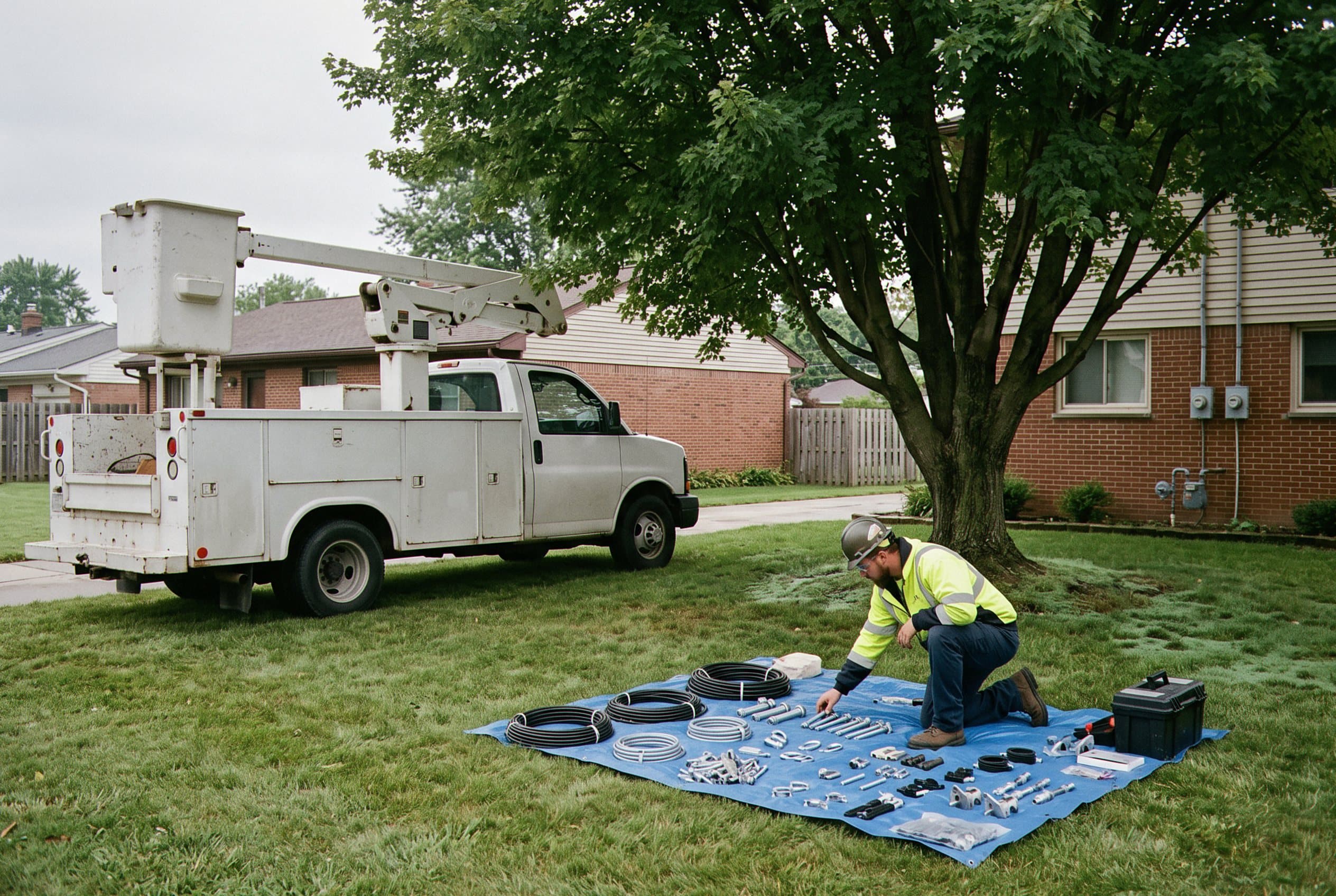
A big shade tree can grow a weak spot long before it ever fails. Maybe two trunks rise from one tight point and a crack starts to open between them. Maybe a long limb stretches out over the driveway and slowly begins to sag under its own weight. From across the yard the tree still looks fine. The structure underneath, though, is already under real strain. We install cables and braces that share that load so the tree can keep standing for years to come. This is the work we do every week across Sterling Heights. Before we touch a thing we walk the whole tree, study the trunk union, the heavy limbs, and the lean of the crown, and then we tell you in plain words what we found and what we would do about it.
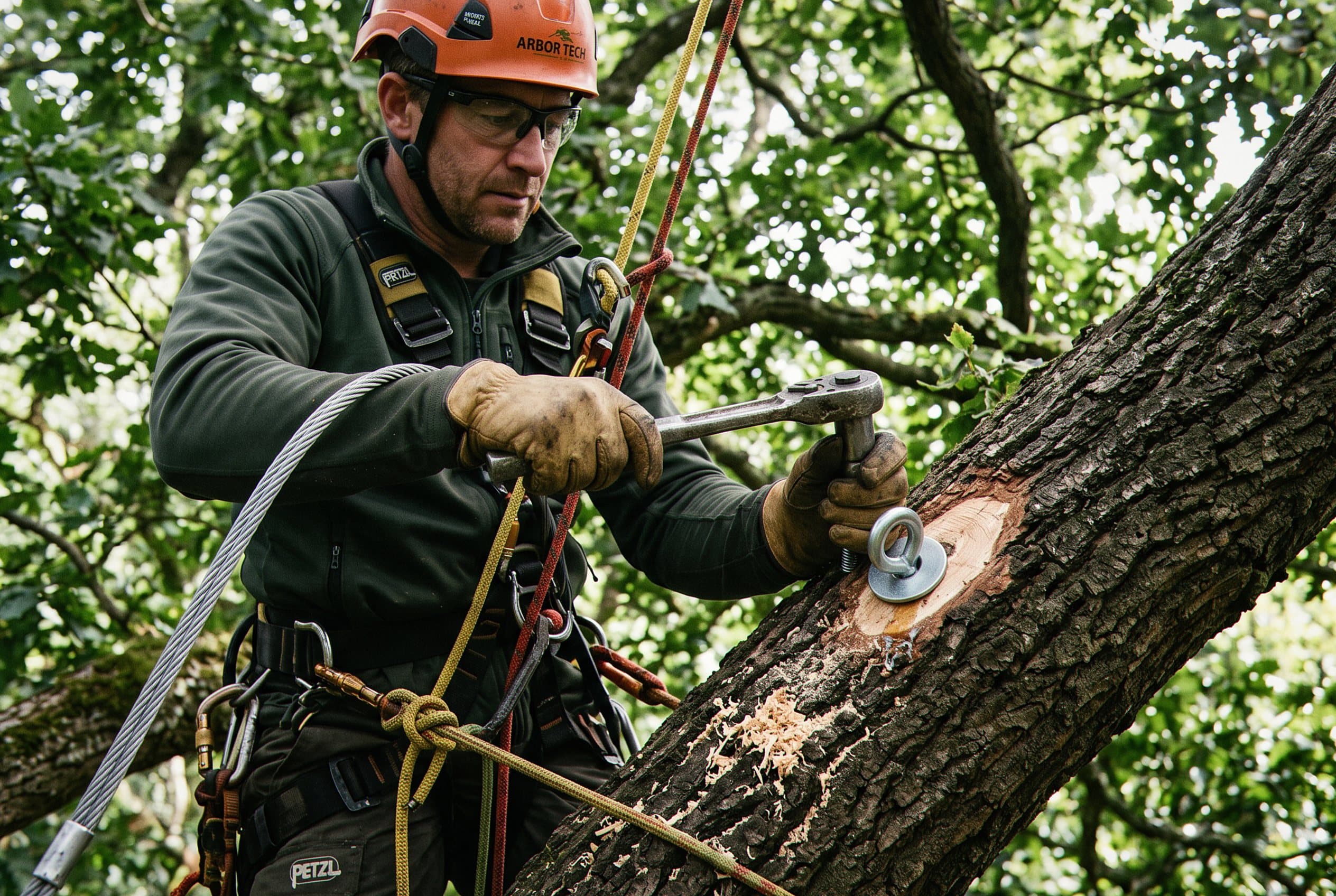
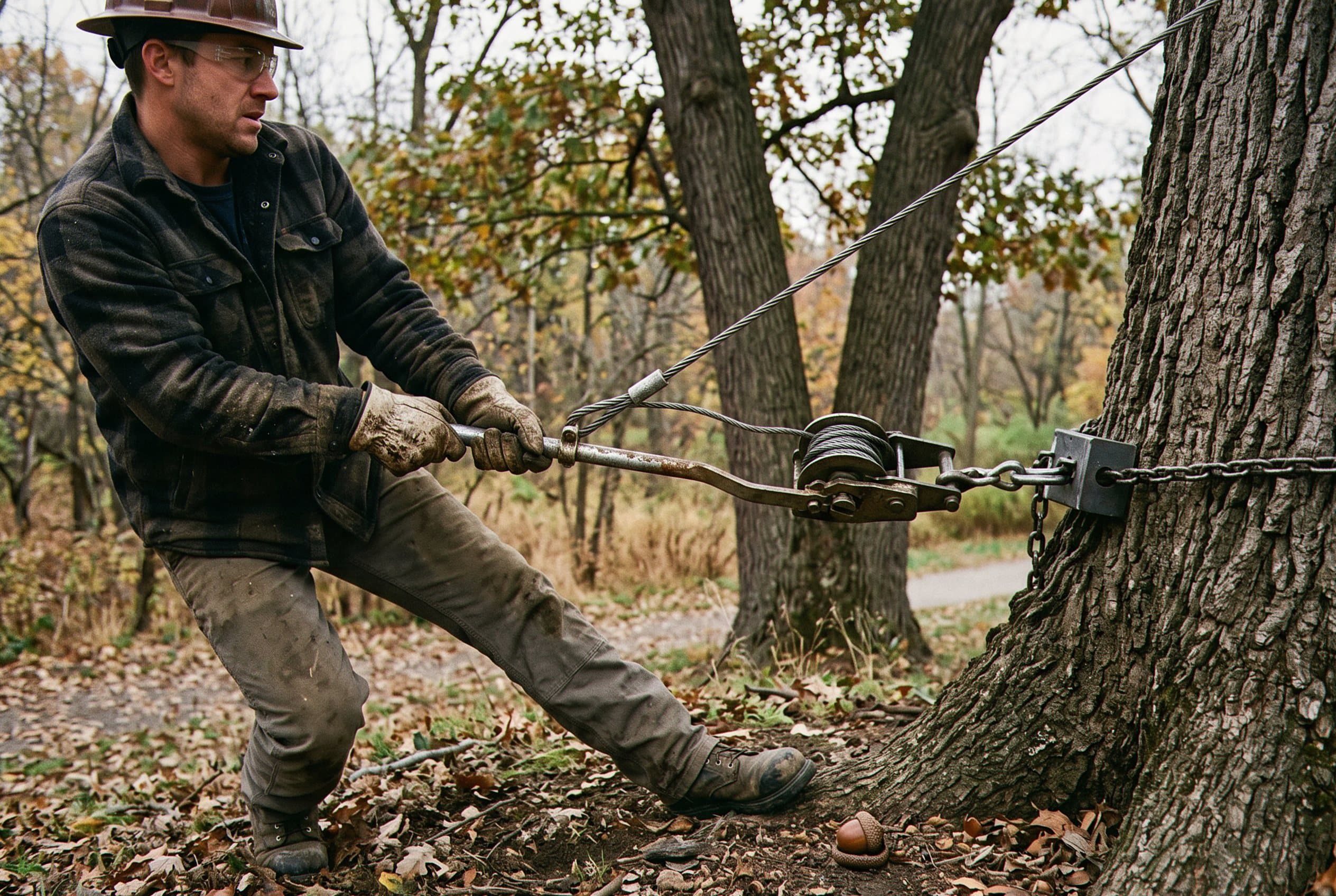
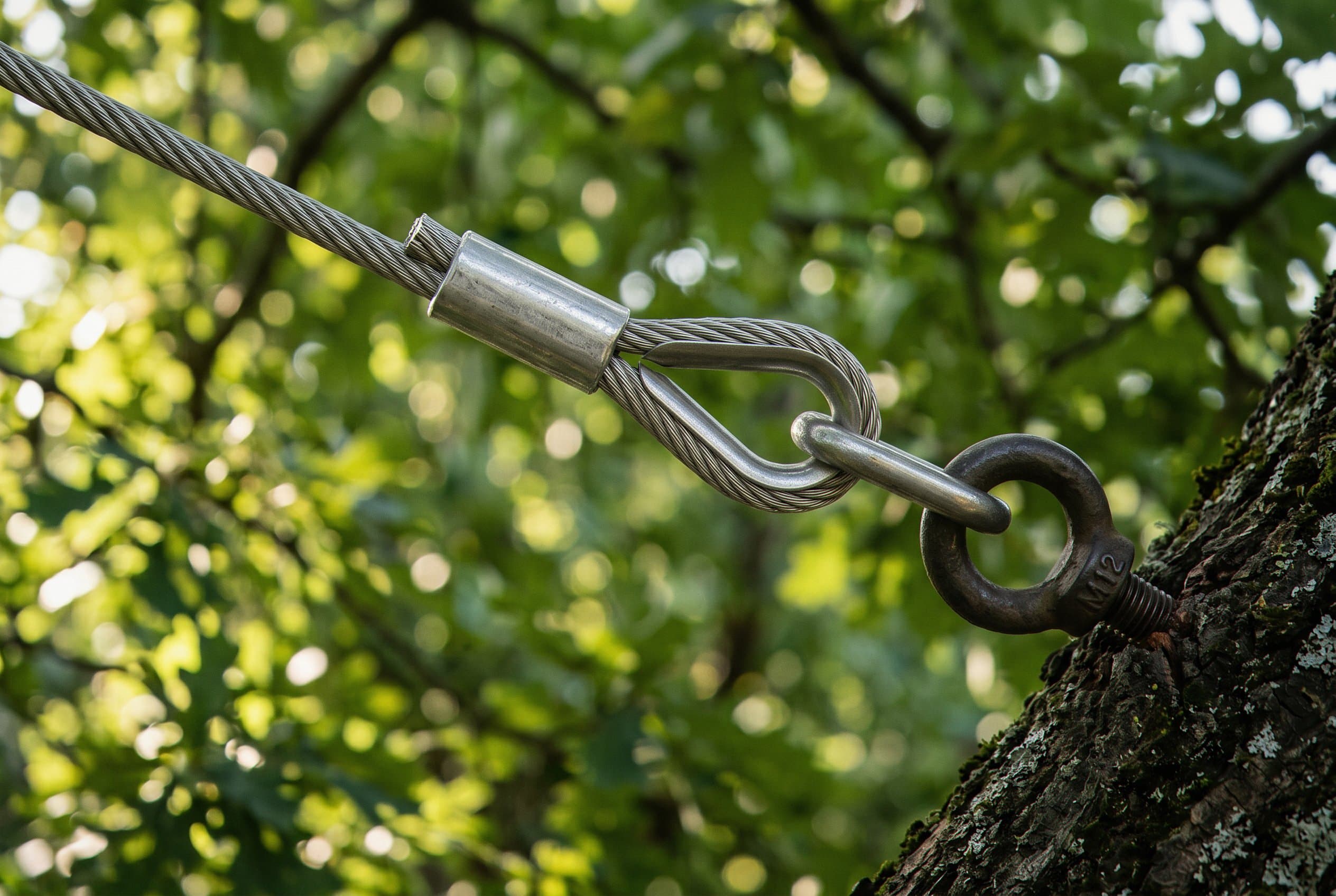
Cabling uses flexible steel cable set high in the canopy. It links two limbs or two trunks so neither one can swing too far in a storm. The cable stays slack on a calm day and only takes the load when the wind pushes hard. Bracing uses steel rods through the wood itself, and we add it where a crack has already started or where two stems rub at the base. Most trees that need this have one clear weak point, not ten. We find that point, size the hardware for the tree, and set it so it is almost invisible from the ground. Done right, you will forget it is even up there.
- We climb and inspect the whole crown first, so the support goes where the strain really is and not just where it is easy to reach.
- Our cables sit high and stay hidden, so the tree keeps its natural shape and your yard still looks the way you want it to look.
- We size every cable and rod to the tree in front of us, since a young maple and an old oak pull very different loads in a storm.
- We pair the support hardware with light, careful pruning when it helps, so we lower the strain on a weak limb over time instead of only holding it in place.
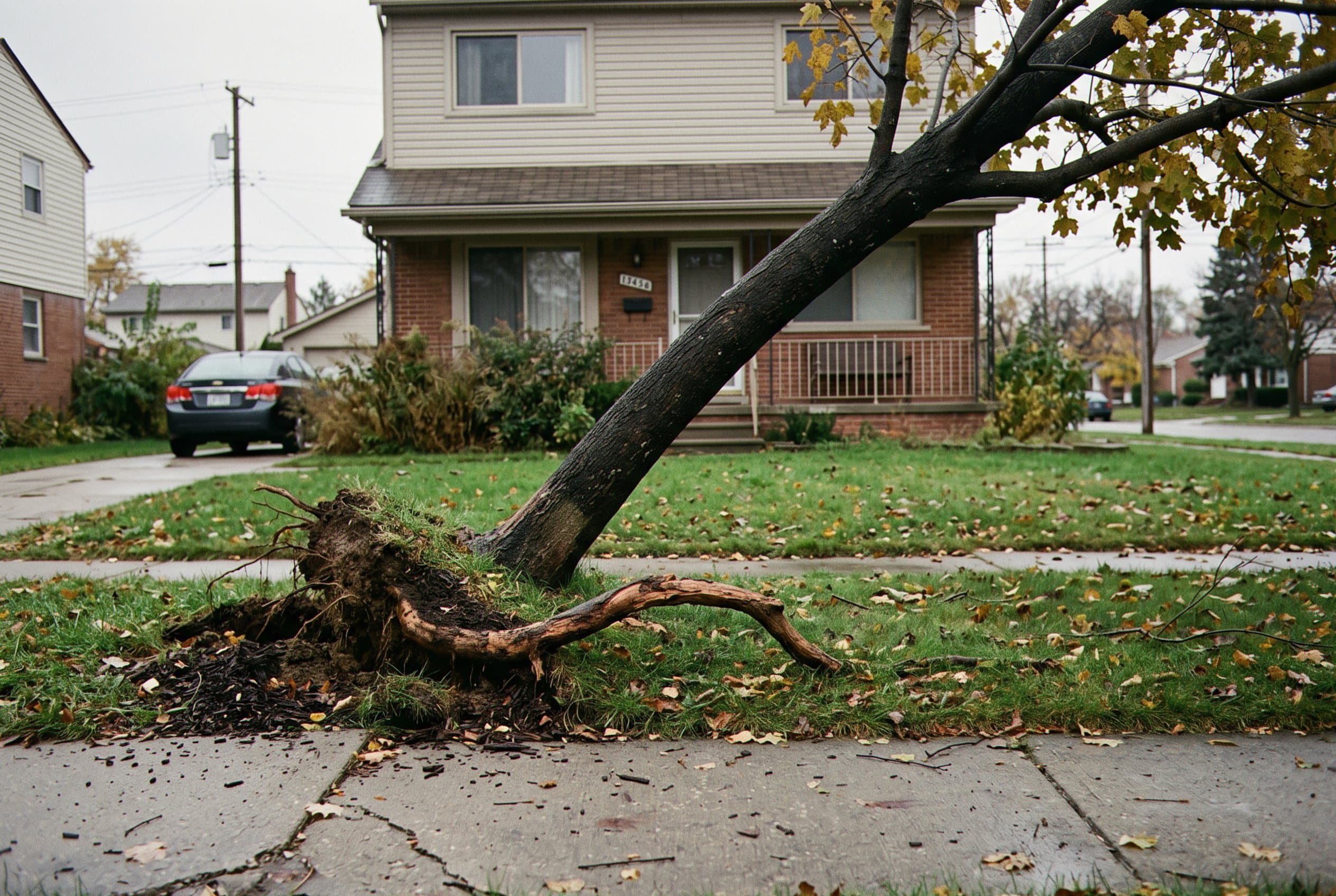
- We check the lean and the soil at the base too, because a tree that is slowly tipping needs a very different answer than one with a simple split fork.
Ice and wet snow are the real test here. A limb that holds all summer can come down in January when it is loaded with an inch of ice. That is why we like to look at trees in fall, before the first hard freeze, while we can still set hardware in dry wood. If a storm has already cracked a tree, call us right away. We can often cable a fresh split and save a tree that looks lost, as long as the wood is sound and the crack has not run too far. We also come back to check the hardware after a few seasons, since a growing tree can change the load on a cable over time.
If a tree on your property has a split fork, a long heavy limb, or a lean that worries you, call us. We will come out, look closely at the structure, and tell you whether cabling and bracing is the right move for your Sterling Heights yard. If it is not the right move, we will tell you that too.